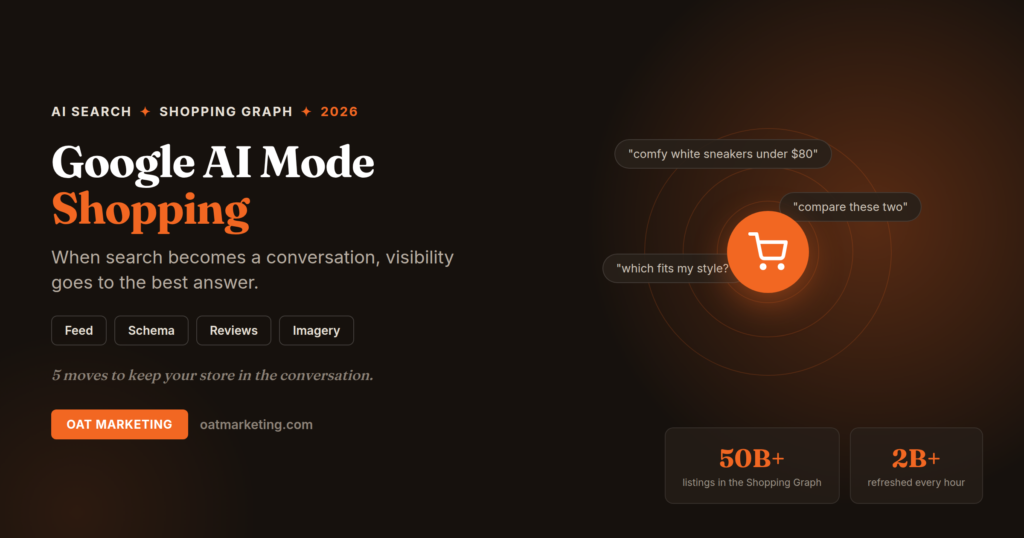
Google's new AI Mode shopping experience brings together Gemini's capabilities with Google's Shopping Graph, turning product discovery into a conversation that helps shoppers browse for inspiration, think through a decision, and narrow down to the right product. For store owners, this is not a cosmetic change to Search. It changes how customers find products, which changes what it takes to be found. This guide explains what AI Mode shopping is and the exact moves that keep your store visible in 2026.
For years, shopping on Google meant keywords and filters. The shopper had to know the right words, and your job was to rank a page for them. AI Mode flips that. People now describe what they actually want in plain language, and Google assembles an answer from its Shopping Graph. The deciding factor shifts away from how aggressively you market a single page and toward how well a machine can understand and trust your product information.
What Changed, and Why It Matters to Your Store
Search shopping used to be keywords and filters. Now it is a guided conversation. Instead of forcing the shopper to know the exact words, AI Mode interprets what they actually mean, then pulls from the Shopping Graph to suggest, compare, and refine in natural language. The shopper describes a need, and Google builds the shortlist.
That shift matters because the answer is now assembled from structured product data, not just your blog copy. Whether your store appears depends on the quality of your feed, your structured data, your reviews, and how fresh your price and stock signals are. Strong product data is the new shelf position.
The 2026 shift: Google's AI reads your product data to decide what to recommend inside a conversation. An incomplete, inaccurate, or stale listing does not just rank lower. It means AI systems describe your products incorrectly, or skip your store entirely when the buying decision is being made.
What Google AI Mode Shopping Actually Is
Conversational browsing over the Shopping Graph
AI Mode lets people shop in plain language rather than keywords and filters, then draws on Google's Shopping Graph to answer. That graph holds more than 50 billion product listings, from global retailers down to local shops, each carrying details like price, reviews, color options, and availability, with more than 2 billion of those listings refreshed every hour. The richer and more accurate your listing, the more confidently it can be surfaced.
Virtual try-on
For fashion, shoppers can upload a full-length photo of themselves and see how an item looks on them in moments, using a model built to understand the body and how clothing falls. Clean, high-quality product imagery is no longer just nice to have. It is the raw material these features depend on.
Agentic checkout
When a merchant is eligible, Google can buy an item on the shopper's behalf on the merchant's own site using Google Pay, after confirming the purchase and shipping details. The path from inspiration to purchase is collapsing into a single flow, so being present and eligible at the discovery stage matters more than ever. These shoppable features now also live inside the Gemini app, with product listings, comparison tables, and prices pulled from across the web.
Classic Search vs AI Mode Shopping
The change is easiest to see side by side. The same shopper, the same intent, a very different path to the purchase.
| Element | Classic Search | AI Mode Shopping |
|---|---|---|
| How people search | Keywords and filters | Natural-language conversation |
| What gets surfaced | Ranked pages and ads | Structured product data from the Shopping Graph |
| How shoppers decide | Open tabs and compare manually | AI compares and narrows inside the chat |
| Where buying happens | Your site, after the click | Often inside the experience via agentic checkout |
| What wins visibility | Page-level SEO | Clean, trustworthy, complete product data |
Five Moves to Show Up in AI Mode
Make your product feed complete and accurate
Your Google Merchant Center feed is the foundation AI Mode reads from. Fill every relevant attribute, write specific titles and descriptions, and keep categories correct. Gaps, blanks, and guesses are exactly what cause a product to be passed over when the AI builds its shortlist.
Add product structured data
Mark up your product pages with schema for price, availability, and reviews so machines read them without ambiguity. This is core technical search engine optimization work, and it directly affects how confidently your products can be surfaced inside a conversation.
Earn and display real reviews
Ratings and genuine reviews are part of the data AI leans on to recommend. Make it easy for happy customers to leave them, respond consistently, and keep them flowing rather than letting them go stale a year after your last one.
Keep price and inventory truthful in real time
With listings refreshed hourly, mismatched or outdated price and stock signals erode trust fast and can filter you out. Accurate, live data keeps you eligible, especially for features like agentic checkout where the price has to be right at the moment of purchase.
Invest in clean, full product imagery
Clear, well-lit, full-length images feed features like virtual try-on and make your listing more usable everywhere it appears. Cheap, cluttered, or watermarked photos quietly disqualify you from the most engaging parts of the shopping experience.
Want your store ready for AI-driven search?
OAT Marketing tunes the product data, structured markup, and SEO foundation that decide whether AI Mode recommends your store or skips it.
Your AI Mode Readiness Check
Before you chase anything new, make sure the fundamentals are solid. Run through this checklist against your store, and fix the gaps first.
- Merchant Center feed complete with every relevant attribute filled
- Product schema for price, availability, and reviews on every product page
- A steady stream of recent, genuine reviews, not a stale block from last year
- Price and stock accurate and updated in real time across feed and site
- Clean, full-length, high-quality images on your top products
- Titles and descriptions written for how people actually describe the product
- SEO, content, and feed treated as one connected system, not separate jobs
Get Your Store Ready for AI Search
We tune product data, technical SEO, and content so AI Mode and the Shopping Graph can find, trust, and recommend your store.
Your Store Should Be Showing Up in AI Search.
OAT Marketing gets your product data, SEO, and feeds ready for Google AI Mode. Book a free audit and find out exactly what needs fixing.
Book a Free Audit